 JOIN
JOIN


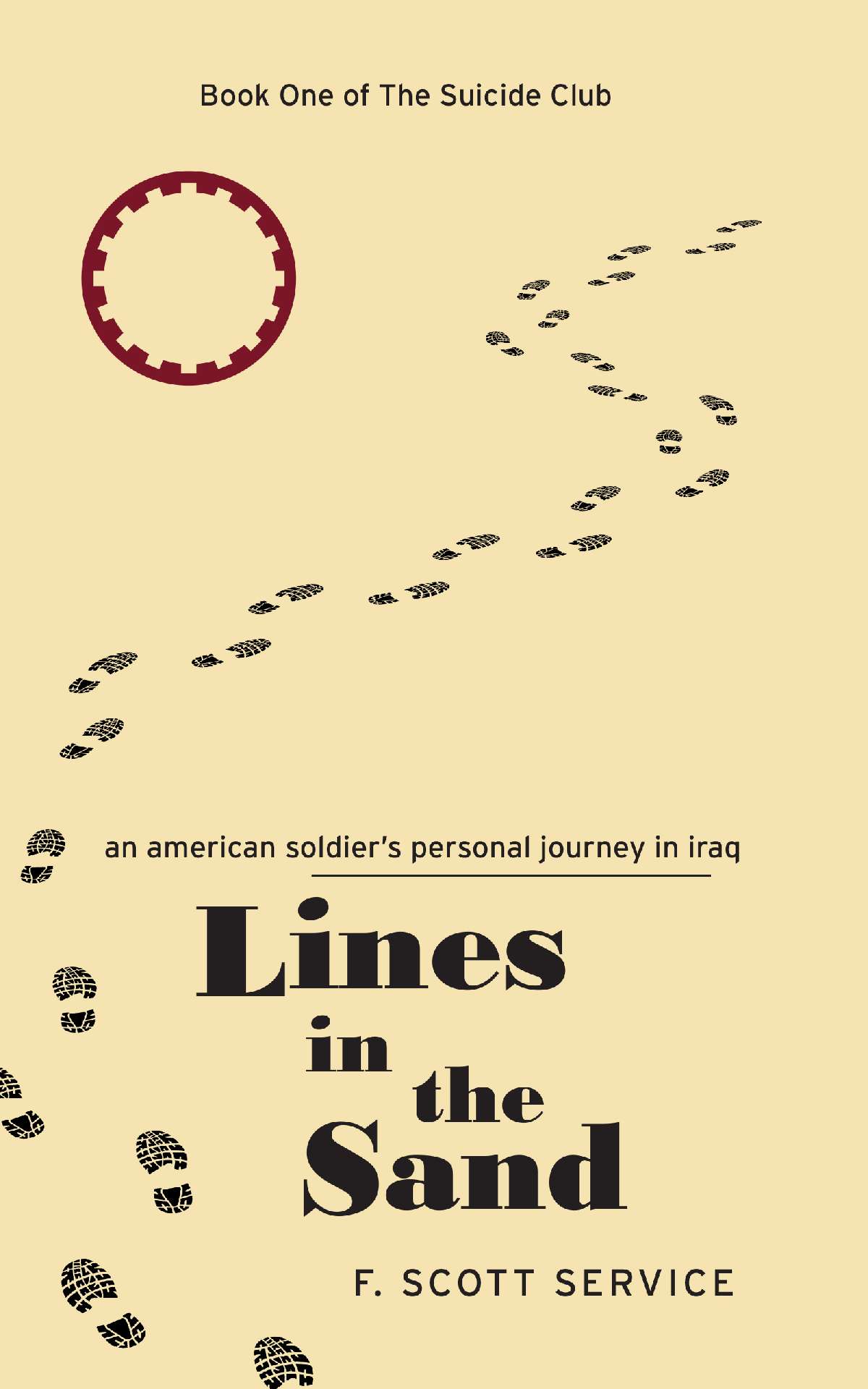
Lines in the Sand: An American Soldier's Personal Journey in Iraq - The Suicide Club 1
Genres: Autobiography, Memoir, Narrative Nonfiction
Age Groups: 18+
Formats: Ebook, Paperback, Hardback
Winner in the 2022 Wishing Shelf Book Awards for Adult Nonfiction
Winner of the Pacific Book Review Star for a Memoir of Excellent Merit
For F. Scott Service, a five-minute phone call one peaceful morning was all it took. Faced with the terrible dichotomy of his moral opposition to war and an innate sense of duty, little did he realize that when he was called for deployment in Iraq that his would be the journey of a lifetime.
A tour of duty destined to change him forever.
Witnessing the violence of a country ravaged by chaos and facing the disintegration of his life back home, his sojourn in Iraq forced him to fight a new battle, a battle within himself. What had once been a noble intention became a desperate struggle to salvage what was left of his humanity, an excursion into the darkest recesses of the human mind that ultimately led him to question everything he had come to believe.
Pushed to the edge, only then would he discover what lay within.
Author F. Scott Service recounts his wartime experience within an artfully lyrical epistolary composition. Transcribed from his handwritten journals, Lines in the Sand is a powerful exercise in self-exploration amid heart-wrenching loss and anguish.
Reviews
IndieReader
From the moment that Scott receives a phone-call in November 2003 advising that he is to be deployed to Camp Anaconda, Iraq, he keeps a journal. This fascinating and gripping book is the result of those entries. Scott is skilled in aviation hydraulics and is placed in the Component Repair Platoon, so LINES IN THE SAND is not an action-packed combat read but a contemplative, primary-source narrative of his personal journey. Scott’s writing is intelligently sublime and shot through with an eloquent seam of poetry which is unusual for a book of this genre. It reads beautifully; measured yet flowing and totally absorbing. It is obvious through the elegant prose that Scott has an introspective, sensitive personality; truly a writer’s soul. Consequently, the reader feels a sense of foreboding which begins with the deeply depressing atmosphere of Fort Knox in Kentucky. The scale of sheer incompetence from top military administration in handling these men at training stage and beyond is breathtaking. The lack of guidance, instruction or clarity leads to days of enervating limbo, sapping any last vestige of mental strength. It would be laughably Kafkaesque if not so utterly shocking. The abject squalor in which the soldiers exist whilst in Camp Anaconda reduces many to base, animal degradation and psychological collapse. It is appalling as it is compelling and raises profoundly disturbing questions about the plausibility and management of modern warfare, as well as examining who we truly become when the veneer of respectability is torn away. The Middle East is wonderfully realized through consistent reference to its landscape; the searing heat, spectacular sunsets and perpetual sand. Scott’s visceral description of the effects of the desert elements on both his mental and physical wellbeing really brings the inhospitable environment into sharp, uncomfortable focus. His considered understanding of the reasoning behind the Iraqis’ retaliations is refreshing.
However, LINES IN THE SAND is not just about the traumatic effect of military conflict. Scott leaves for Iraq happily married to Rita; he touchingly writes of an all-consuming love for her and their life in Montana. Rita’s communications keep Scott going in the bewilderingly brutal early days but it becomes painfully obvious from her detached, sporadic responses that Rita is beginning to withdraw from the marriage. The raw agony expressed in the journals by Scott as realization sets in is harrowing and almost voyeuristic to read, exacerbated by the continual fear of death as he endures the unremitting nightly mortar shelling. His subsequent struggles with PTSD, homelessness and alcoholism following his return from Iraq are equally heart-rending and poignantly expressed. It’s testament to his underlying mental fortitude that he eventually attains a level of acceptance and harmony.
LINES IN THE SAND is a profound, thought-provoking and cerebral chronicle of one man’s soul-destroying tour of duty in Iraq and how he managed to overcome its legacy of chaos.
~Rose Auburn for IndieReader
Pacific Book Review
Whether we want to admit it or not, humanity as a whole is far too often ruled by violent tendencies than not. While many advocate for peace and equality, violence always finds a way of trickling into our grander societies, upsetting the balance and causing chaos wherever it goes. Yet not all of humanity is like this. As psychologist professor Steven Pinker once said, “Human nature is complex. Even if we do have inclinations toward violence, we also have inclination to empathy, to cooperation, to self-control.”
In author F. Scott Service’s Lines in the Sand: An American Soldier’s Personal Journey In Iraq, the author takes readers on an ever personal journey through their time serving overseas. The author found himself serving the military overseas and feeling a sense of duty to his fellow soldiers, and soon found himself facing the unyielding violence of war which forced him to face everything he ever believed and knew about himself. From the moment he discovered he’d be joining the military to the struggle to overcome PTSD after returning home, this is a powerful story of self-exploration, loss, and heartbreaking anguish.
This is a truly powerful, moving and emotional memoir. The author does an excellent job of conveying the confusion, the pain and the heartbreak that comes from being thrown into a war. The affect it has on soldiers both in their personal life and overseas serving was captured in detail here in this book, and the author did a great job of showing the impact the war had on both sides; both for the military men and women who served and those innocent civilians caught in the crossfire of a war they didn’t ask for. The exploration of the author’s personal downward spiral, as the effects of serving become apparent in his marriage and personal life, was a difficult and painful thing to read. Yet I commend the author greatly for delving so deeply into his personal struggles, which should open a more open dialogue about how soldiers are treated overall after their service.
A book such as this is perfect for those who enjoy memoirs, non-fiction reads which delve into more modern history, and the study of warfare on soldiers both personally and mentally. As a fan of memoirs, it was truly engaging to read the author’s experiences, especially as the writing style itself was presented as a series of journal entries kept during his time overseas. His look at things like how much easier it is to kill as a soldier than it is to take the time to understand the viewpoints of the enemy and find common ground for a more peaceful solution is truly profound and moving, and something we all should heed. As an anti-war civilian who hopes for a more peaceful future, the viewpoints of an anti-war soldier such as the author are important and truly memorable.
A tragic, moving and thought-provoking memoir, author F. Scott Service’s Lines in the Sand: An American Soldier’s Personal Journey In Iraq is a must-read memoir. The writing is eloquent and beautifully moving, and captures the raw emotions and moments of those serving overseas. Those hoping to find personal experiences in war to help promote a more peaceful future and get help for those soldiers who return home will not want to miss out on this impactful read.
Awards
2022 Wishing Shelf Book Awards for Adult Nonfiction
Nov 30th, -0001