 JOIN
JOIN


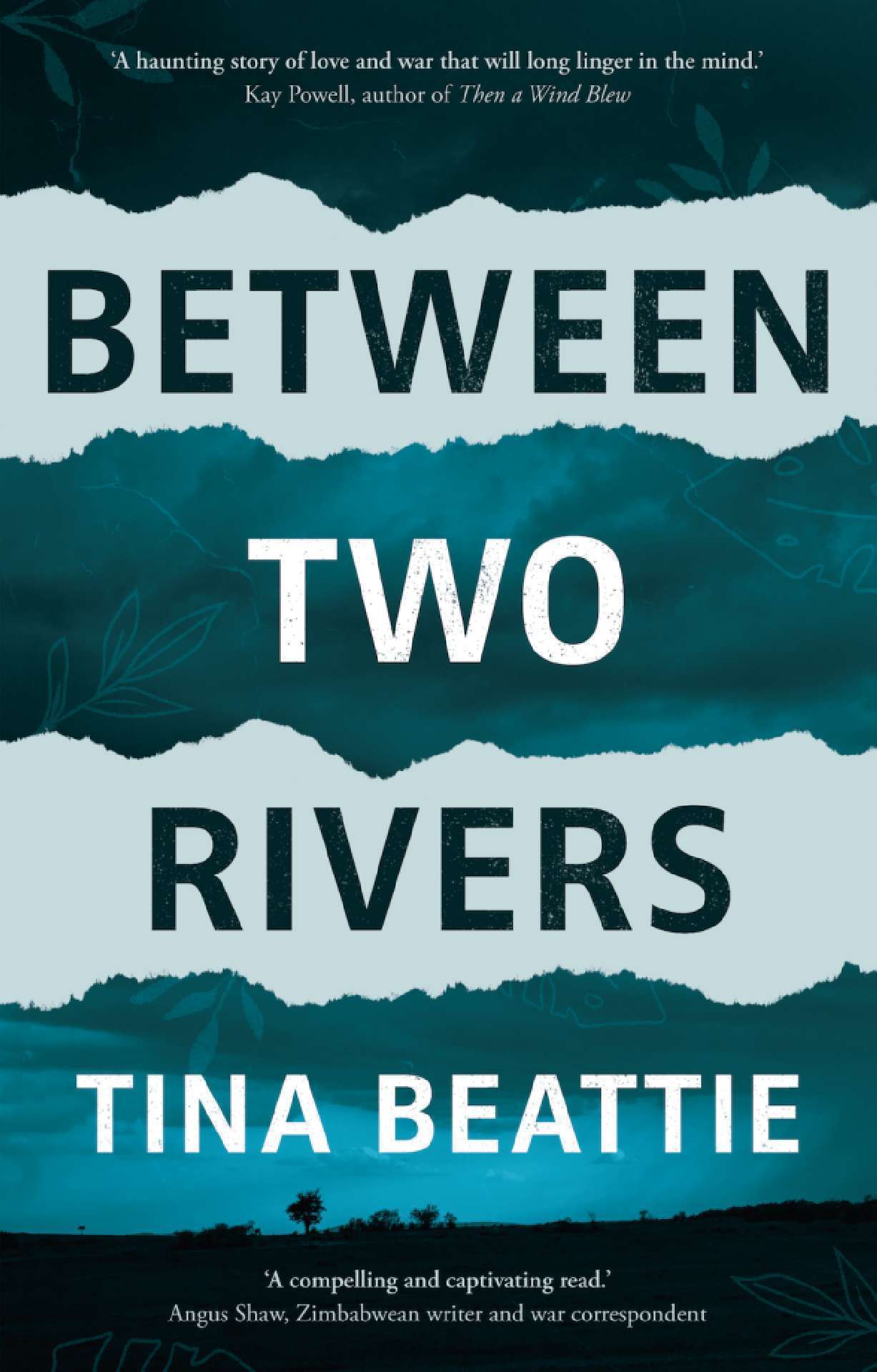
Between Two Rivers
Genres: Contemporary Fiction, Historical Fiction, Literary Fiction
Age Groups: 18+
Formats: Ebook, Paperback
“Msasa trees provided dappled shade for Jenny’s tea party. April sunshine dribbled through the leaves onto suntanned arms. The frangipanis were in bloom ...”
This is the scene that greets Scottish doctor Morag soon after her arrival in Salisbury in the 1950s. Jenny is an English wife and mother trapped in an increasingly violent marriage and secretly in love with another man. Soon, Beatrice will come to work as Jenny’s maid and nanny to her children. Over the next twenty years these three women will form deep bonds of affection, but can their loyalty to one another survive as the façade of white suburban life is shattered by war?
In a novel that moves from the Firth of Clyde in Scotland to pre-independence Zimbabwe (then Rhodesia), from the illusory idyll of colonial privilege to the traumas of guerrilla war, Beattie explores the hidden lives and untold stories of those caught up in the dying years of white rule in Africa.
"Beattie explores our humanity in its beauty and brokenness through women’s voices. Fictional voices of the marginalised have been inserted in the recorded history of the country, not to create an alternative history but to add to its rich, multi-faceted texture." (Chiedza Musengezi, Zimbabwean poet and author)
"A compelling and captivating read. The story is a fascinating weave of black and white characters. I loved it despite scenes that deeply disturbed me, having been through those times. Tina Beattie has captured an essence of the time with precise and knowledgeable detail." (Angus Shaw, Zimbabwean writer and war correspondent)
"This is a profoundly beautiful story set against a backdrop of turbulence and murder. The author perfectly captures the sights, sounds and smells of Rhodesia during the final years of white minority rule. Into this troubled land comes Morag, a young Scottish doctor, appalled at the way the Black Africans are treated. When she meets Benedict, a young Catholic priest, with beliefs and secrets beyond his faith, the seeds of tragedy are sown. But this is also a novel about love and hope and friendship beyond the barriers of race and colour. This is an outstanding novel, deserving wide readership." (Robin Price, GoodReads reviewer)
Reviews
Angus Shaw, Zimbabwean writer and Associated Press war correspondent
Between Two Rivers was published by Weaver Press in Zimbabwe, as well as being published independently by me in the UK. This is a reader's report commissioned by Weaver Press:
Between Two Rivers is a compelling and captivating read ... The story is a fascinating weave of black and white characters for two decades to the end of the war. ... There is passion, love and violence, yes. For me, it is a truly commendable read. I loved it despite scenes that deeply disturbed me, having been through those times.
The Tablet (The Pastoral Review)
‘So where to begin? Love and war. The beginning and ending of every story worth telling.’
Between Two Rivers tells the story of the Zimbabwean civil war. The country is ruled by a minority white elite who, after a declaration of independence, are drawn into a bloody and violent conflict against guerrillas fighting for black majority rule.
Spanning two turbulent decades, the novel tells the story of three women whose lives become irreversibly connected as the war progresses. Jenny desperately wants to be a perfect wife and mother but struggles with her abusive husband and the increasingly racist and violent white community she is a part of. Beatrice, her black maid, is caught between two worlds: committed to her job and her Christian faith, yet haunted by the voice of her ancestor who increasingly encourages her to fight against her white employers. One day, Jenny’s Between Two Rivers has the distinction of being a book I wanted to re-read as soon as I had finished it,in part because an awful lot is covered in this book. It confronts racism and colonialism, misogyny and domestic violence, and some of the biggest questions about how we live a ‘good’ life, particularly in times of societal strife and violence. Beattie uses the relationships between Jenny, Beatrice, Morag, their partners and families to explore these issues and, overall, this does lead to a compelling and exciting narrative. However, it is not a simple or straightforward story, and at times I struggled to follow the detail of the narrative and make connections between events as the story moved through time.
That said, Beattie is a rare example of a writer who is able to combine her considerable academic expertise with a well-written and enjoyable story narrated by believable and memorable characters.
Chiedza Musengezi, Zimbabwean author
Between Two Rivers is a novel set in Southern Rhodesia between the mid-fifties and the mid-seventies. It is a country bitterly divided along racial lines where great inequalities have led to an armed conflict between the Rhodesian army and the nationalist guerrillas. Despite being set in a particular country at a particular time, prejudice, privilege, politics, and power lead all too often to bitter conflict in our troubled world, and as such the characters and situations speak to us all.
This is not a novel with a single viewpoint. Three perspectives run concurrently, those of the three primary characters, Jenny, Beatrice, and Morag. It is as if the author is reminding us that whatever the differences of class, education, culture or ethnicity, the experience of being a woman – be it as a wife, a mother, a widow, a lover – is one which enables mutual understanding.
Jenny is a white married mother of two, living in one of Salisbury’s white middle-class suburbs, while her black nanny/housemaid, Beatrice, lives in a small kia without running water or electricity on Jenny’s property. The third woman, Morag, is a young Scottish doctor, and recent arrival. Having recently broken up with her boyfriend, and looking for something meaningful to fill the void, she jumped at the opportunity to assist in an urban medical practice and a township clinic, both owned by Jenny’s father. Despite their very different backgrounds, the paths of these three women merge and they lend support to each other.
Together these three female characters deepen the reader’s understanding of women across cultures and class, their concerns, and what matters to them, especially in times of conflict. Beattie writes with great sensitivity and perception. Jenny, an apparently meek wife, puts up with spousal abuse to keep up appearances, which offers an indirect reflection of Rhodesian cultural values – though one wonder if there is any society in the world where abused women are not encouraged to sacrifice themselves so as not to bring stigma on their families. Morag, although ignorant of Rhodesian mores, local cultures and the country’s challenging history comes from a liberal Jewish family. Therefore, as an educated outsider, she can interrogate her different milieu and ask the unspoken questions. Beatrice, ‘Mama Africa’, raises her white charges with loving generosity while her own children grow up in the care of her mother in the rural areas. Her mounting anger gives her the strength to defend herself. First, against her abusive husband, who works in South Africa but does not send any money home to support the family. Secondly, as a profoundly empathetic woman whose life is hard, she can understand her employer’s pain, as she defends Jenny against her husband’s retributions. Third – and what for me resonated most strongly – she leaves her poorly paid employment in defence of her own independence and freedom.
Beattie’s subtle, layered, portrayal of her characters offers the reader a complex portrayal of society – or societies – and a small self-enclosed, self-absorbed nation fighting for its survival against its history, its people and its future.
The author inhabits characters across the barriers of race, class, gender and religion as they interact with each other. In doing so, she challenges the idea that one cannot and should not write beyond one’s own narrow frame of reference and experience; as if writers should not think out of the box, do research, and cannot empathise or show imagination. I found her characters credible, illuminating a conflicted period of Zimbabwe’s social history. It is, in fact, the layered themes of Beattie’s writing that make her novel such an immersive read.
‘What does a woman do when her son goes to war?’ reads the first sentence of the first chapter. A rhetorical question, it is the one that captures the mood of the novel, a tension that the writer creates and maintains throughout. Anxiety, fear, uncertainty, and sometimes helplessness intimate a strong underlying sense of danger, which is as discomforting as it is compelling. The war for independence was at its height in 1976 Rhodesia. Young white men faced conscription, not to join up was to be labelled a ‘traitor’ and held beneath contempt. Young black men and women quietly crossed the border into Botswana, Mozambique or Zambia to join the liberation struggle, often without telling their mothers they were going. All the women agonised that they might never see their children again.
War affects everyone. The main protagonists do not score huge victories. Genes, family history, expectations, trauma, along with the political and social environment all play a part in the unfolding narrative. Beattie does not flinch from scenes of domestic violence or the brutalities of war: the wanton loss of life in the villages, at the Catholic Mission or on the white commercial farms. She does not privilege the suffering of one community over the other. When a war-injured young Rhodesian white soldier and a comrade are brought to the mission hospital for medical help, they are both in pain and are frightened for their lives. Both cry out for their mothers. Her sensitivity encourages the reader to empathize with all the victims; to think beyond narrow binaries. Similarly, Beattie does not shy away from the language of the period, which can also be brutal. Racial slurs such as ‘bloody munts’, ‘gooks’, ‘floppies’, ‘piccanins’ lend an authenticity to a society where control depended on diminishing the other.
Though burdened with (terror of) violence, there are many small moments of joy or happiness, reminding us of their transience while nourishing our memories of that which is restorative. Between Two Rivers is written with tenderness but also with rigour. Beattie explores our humanity in its beauty and brokenness through women’s voices. Fictional voices of the marginalised have been inserted in the recorded history of the country, not to create an alternative history but to add to its rich, multi-faceted texture.